
Strategic Thinking: The Key to Qualitative Advancement at the University of Isfahan
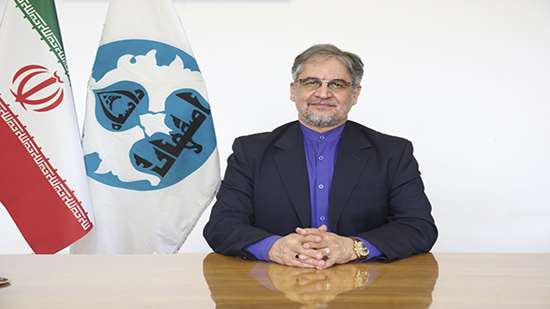
At a ceremony held in honor of Teachers’ Day at the University of Isfahan, the University President, Prof. Roknizadeh, delivered a thought-provoking speech emphasizing the central role of strategic thinking in achieving qualitative transformation in higher education.
Addressing an audience of faculty members at the Prophet Azam Hall, Prof. Roknizadeh described the university as a complex system, stressing that “quality in an academic institution cannot be easily defined or measured.” He cautioned against relying on simplistic or conventional definitions, noting that one of the most critical mistakes is to equate quality solely with quantitative indicators.
He elaborated on the defining characteristics of complex systems such as universities. One of these is emergence—a phenomenon in which the behavior of the whole cannot be predicted merely by analyzing its individual components but arises from their interactions. Drawing an analogy to human consciousness, he explained that awareness emerges from neural activity but transcends the material structure of the brain. Similarly, academic vitality, sense of belonging, and intellectual enthusiasm within a university are emergent qualities that cannot be inferred from the number of buildings, laboratories, or personnel.
Prof. Roknizadeh further highlighted the presence of nonlinear relationships within such systems, where small changes may lead to disproportionately large or minimal outcomes. He also pointed to the importance of path dependency, explaining that past decisions and actions significantly shape the university’s current state, while today’s choices will determine its future trajectory.
Another key feature he discussed was the existence of feedback loops—both positive (reinforcing change) and negative (stabilizing the status quo). He noted that the reactions of the academic community to policies and institutional strategies play a vital role in shaping these dynamics.
Referring to the dynamic boundaries of modern universities, he emphasized that institutions can no longer operate in isolation from society and industry. Instead, there is a continuous exchange of knowledge, resources, and influence between the university and its broader environment.
He also underscored the concept of irreducibility, explaining that understanding a complex system requires not only examining its components but also analyzing the relationships among them. Additionally, he described universities as possessing a networked, scale-free structure, where certain individuals—such as outstanding professors—can have a disproportionately large impact, acting as “locomotives” that drive broader institutional progress.
Criticizing recent trends that reduce quality to measurable outputs, Prof. Roknizadeh invoked the notion of “quality without a name,” inspired by the ideas of Christopher Alexander. He explained that true academic quality is inherently creative, self-organizing, and harmonious, producing a coherent and vibrant whole. In contrast, institutions that rely on imitation and rigid frameworks risk stifling creativity and diminishing the motivation of both faculty and students.
“In a world that is constantly renewing itself,” he remarked, “fixed programs and rigid indicators cannot ensure meaningful effectiveness.” He concluded by emphasizing that genuine quality does not emerge from regulations alone but is sparked by creative energy and intellectual vitality, ultimately leading to the renewal and rebirth of the university.


Comment